

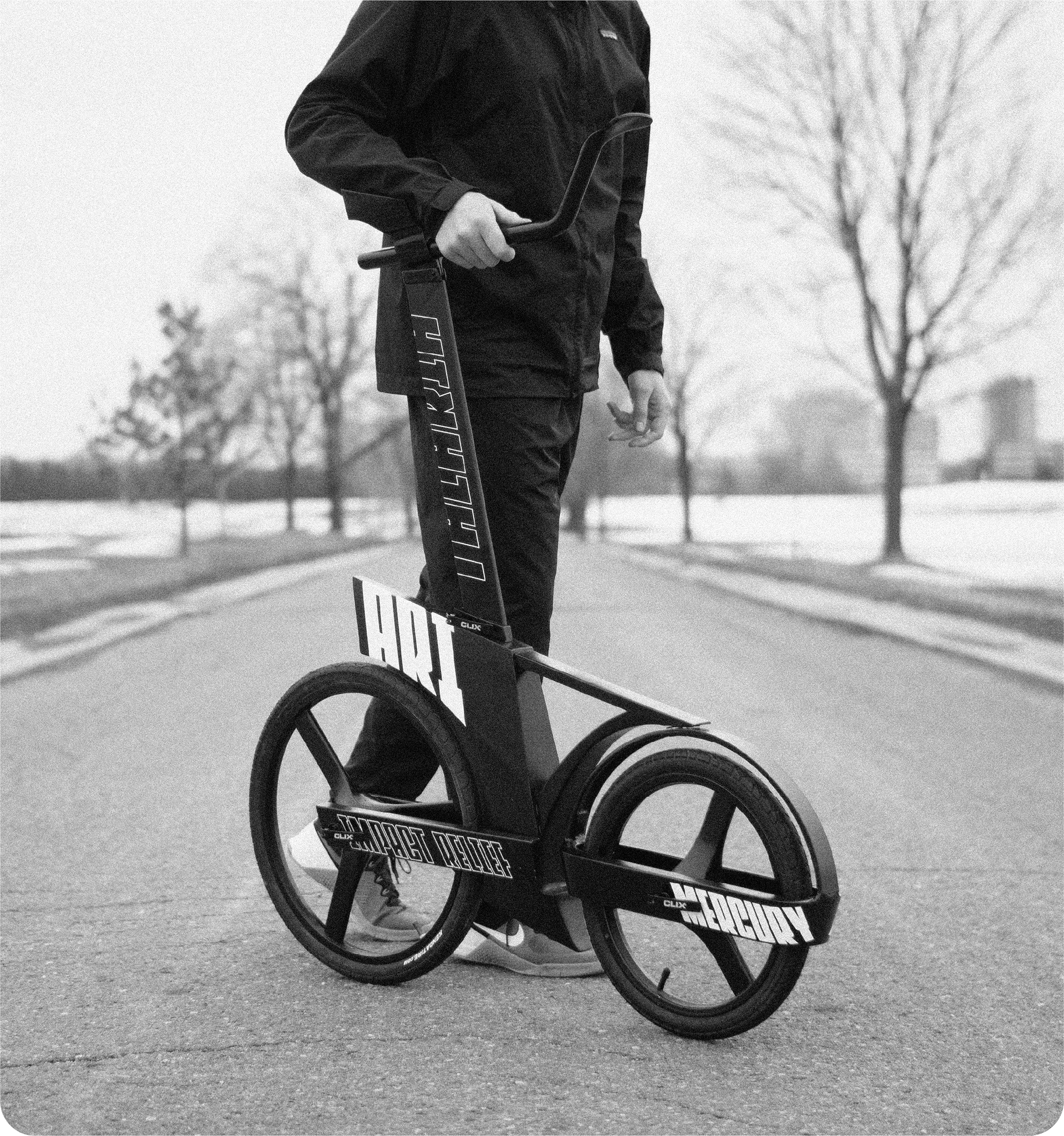
Mercury ARI athletic support structure 2019
An athletic assistive device designed to support runners by limiting the high impact forces experienced by their lower extremities during aerobic exercise.

The Problem
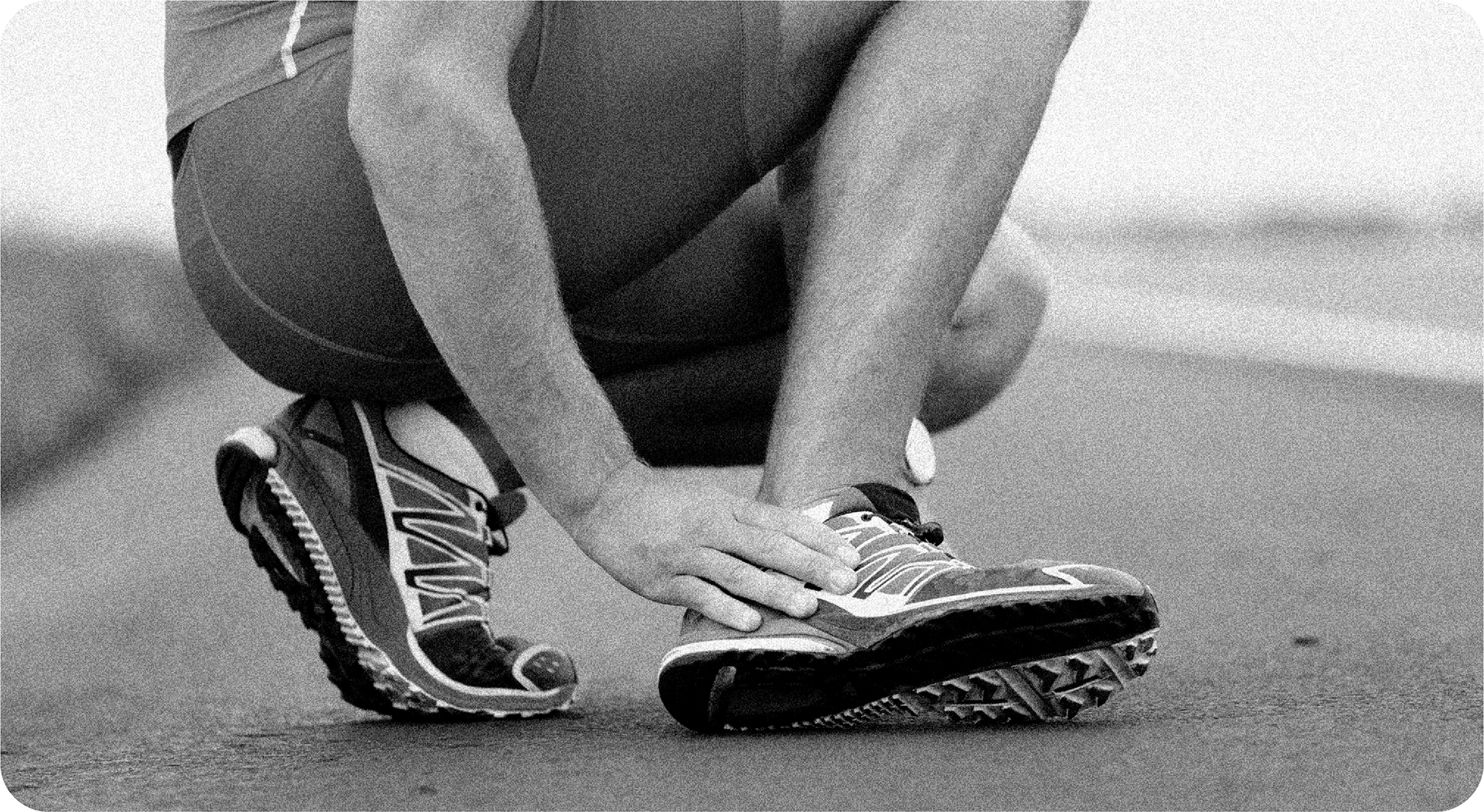
Runners experience 2-12x their body weight in impact force, in every step. As many as 80% of runners are injured every year as a result. Not since the 1970's has this figure seen significant change.
The Need
Overtraining, improper technique and inadequate treatment are the critical factors influencing the running-related injuries prevalent in the sport today.
Runners demand a device which would allow them to run more. Runners deserve a tool which could help expedite their progress towards tailoring their technique. Runners need a product which can enable them to maintain their fitness while recovering from injury or preventing further harm, on their own terms.
The Opportunity
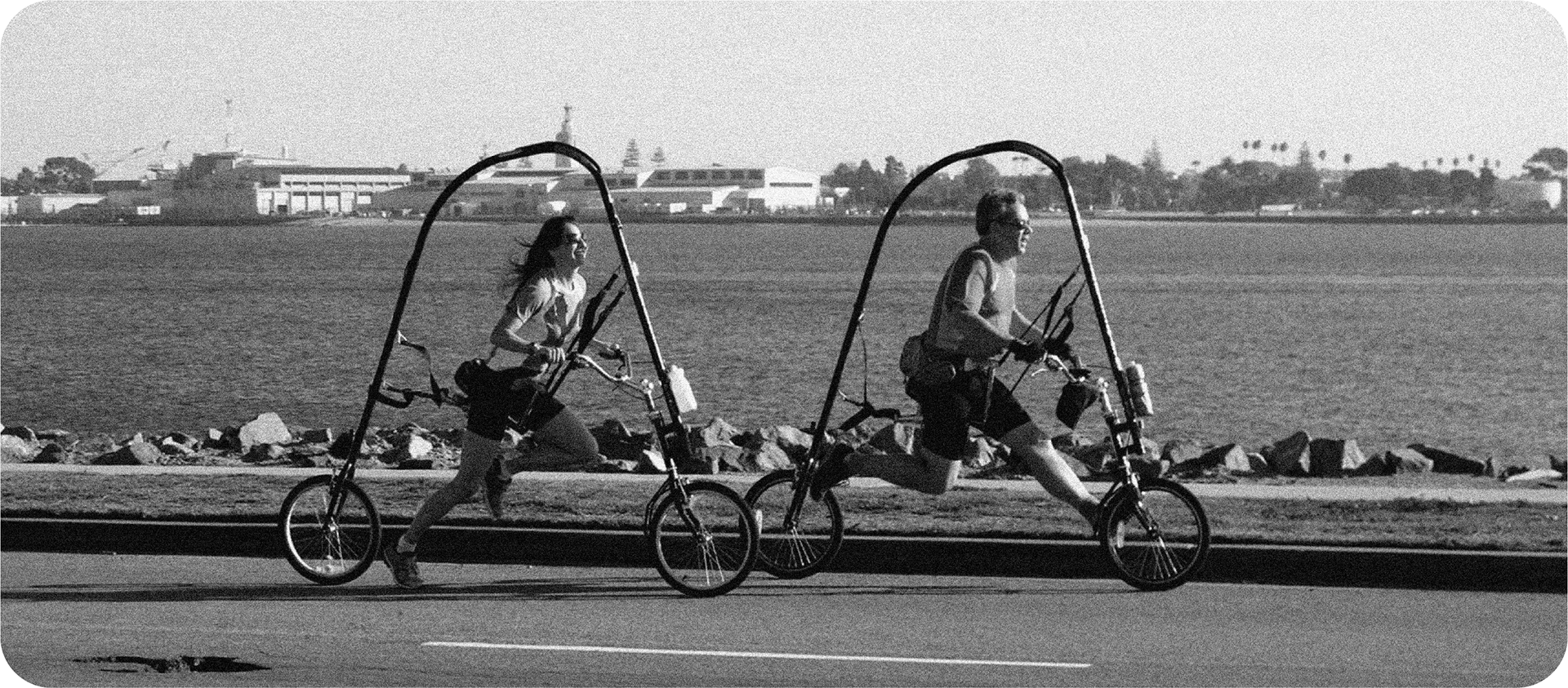
Structural support systems are ubiquitous in many contexts and environments because they are effective stress relievers. Products available to runners, however, are not designed for running. Running is simple, but products which demand a great deal of coordination or turn the exercise into a mode of transportation change that. What may be an effective impact reliever cannot be an effective solution for runners if it interferes with their movement and ritual.
A successful solution would neither ask the body nor the exercise to change. It would be effortless to use, effective in its impact relief & unintrusive on the activity. This can be achieved by designing an assistive device that is easy for athletes to operate, adaptable in the support it offers them and maintains a minimal footprint.
The Research
This report outlines in greater detail the research into impact's role in running-related injuries, the iterative design process that informed the development of the ARI, and the ways in which the final product serves its users as an effective solution.
Product Development
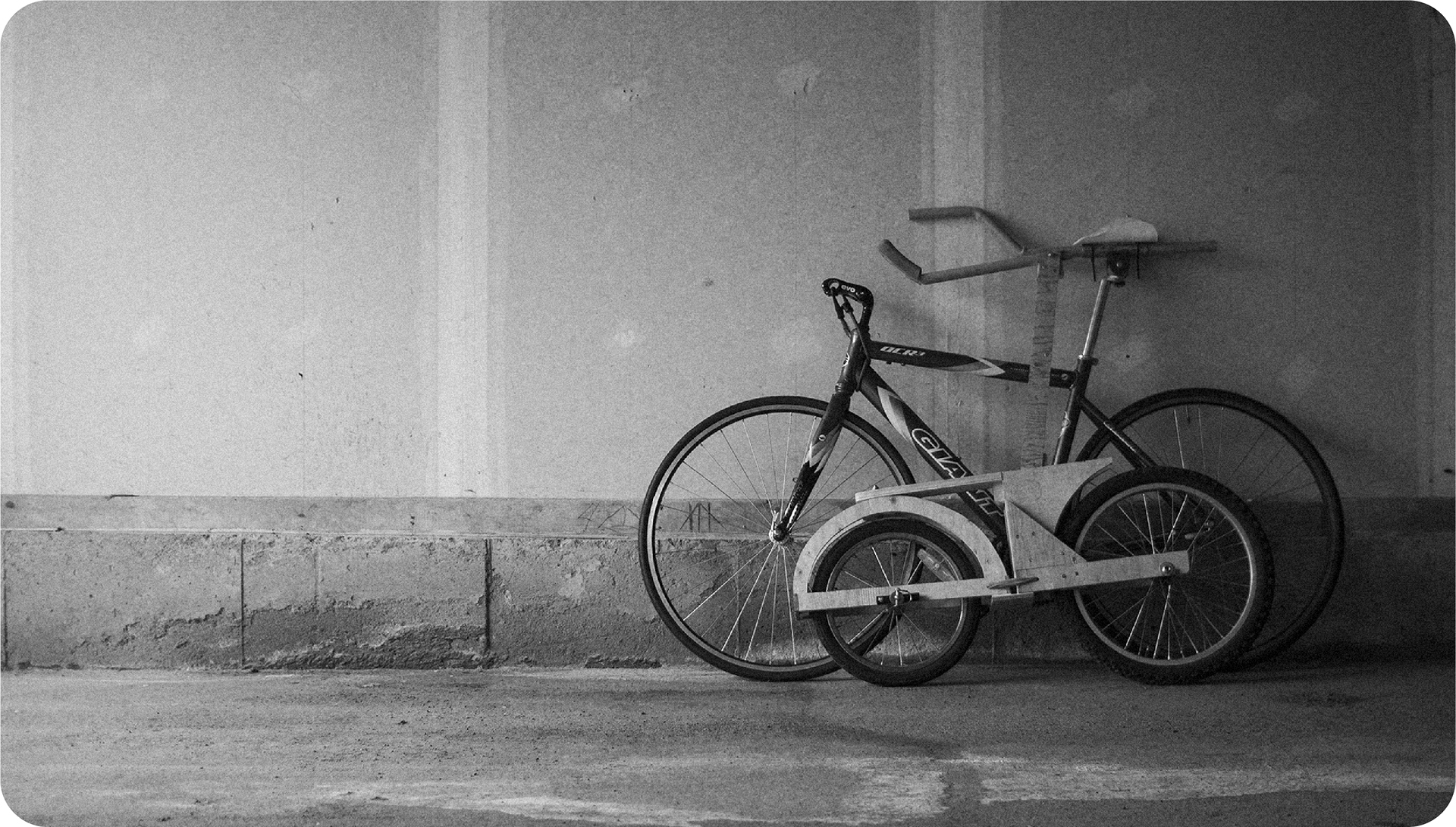
Products that interact with humans should be designed around their human interactions. User testing functional prototypes was instrumental in informing design decisions at every stage of the design process.
This ideation focused on exploring how a system could best track close to the body and facilitate weight distribution into the device’s centre of gravity without demanding runners balance their weight nor alter their gait.

The ARI and the human body
Designing a product which could adequately fit the needs of its users starts with being an adequate fit for their bodies. To fit every percentile, the ARI must be highly adaptable. To serve them equally as well, adaptation should be as uncomplicated as possible.
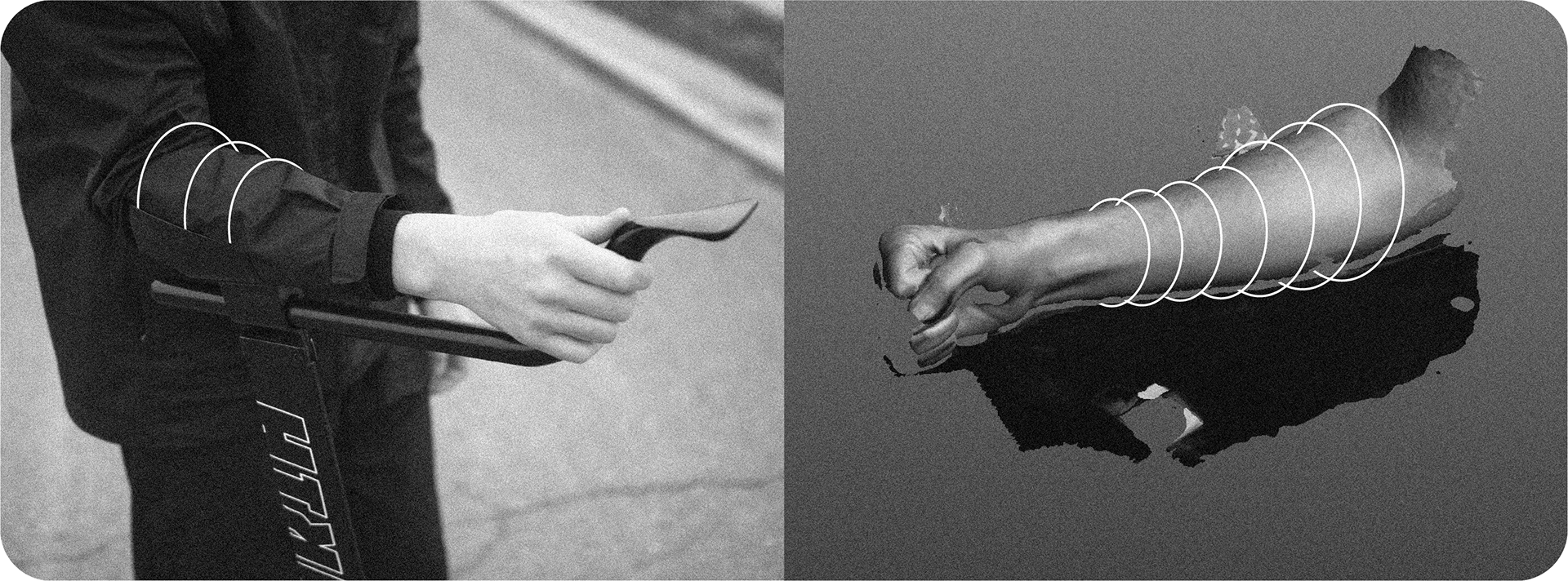
Human-Centred Design
While the main body and handlebar adhere to one standardised size, the forearm support is designed to accommodate interchangeable parts to accommodate different sized limbs, for those who are most dependent and require the most support. Only by modelling this part around 3D scans of differing forearms, could a perfectly organic fit be achieved.
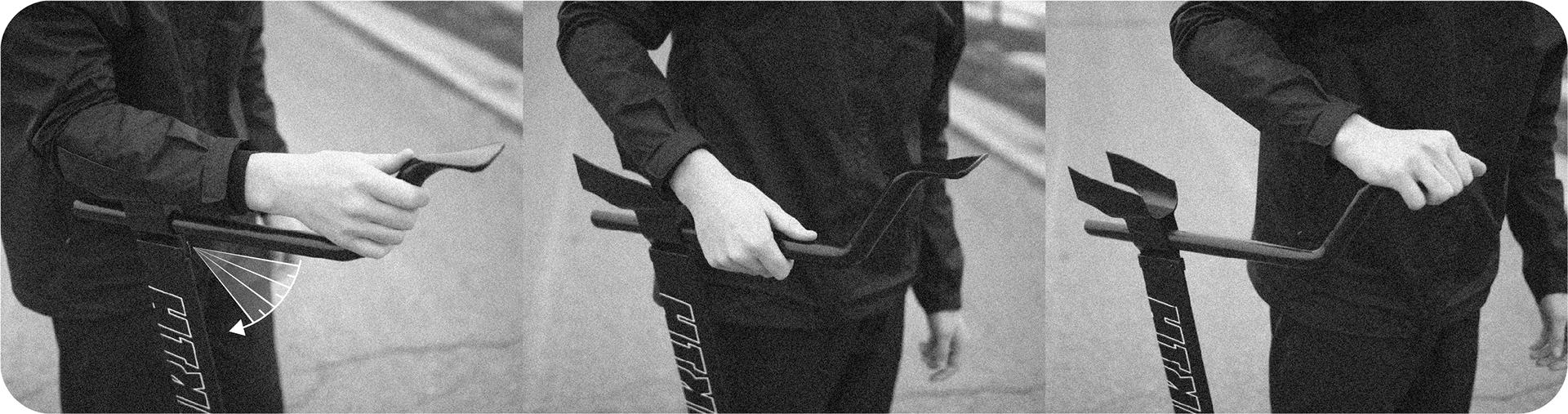
The Interface
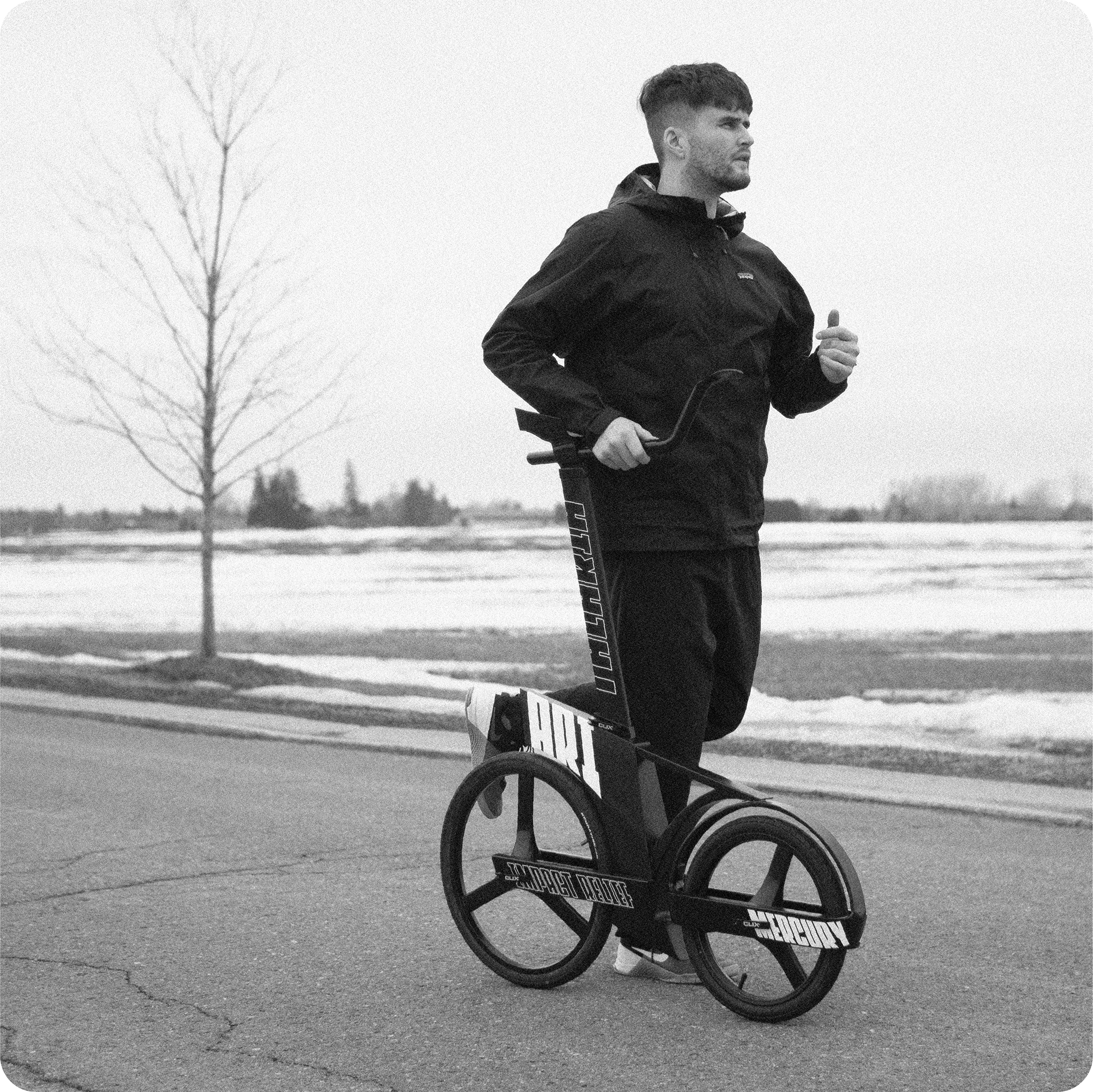
The ARI handle provides adaptable support to users of varying dependencies in a dynamic, uncomplicated way. The 3-in-1 interface is adaptable in three axis, enabling runners to distribute their weight through their arms, off their legs, and into the product to limit their impact experience, in whatever way is most comfortable for them.
A cantilever form is stiff where strength matters but also naturally forgiving, absorbing vibrations of the road and acting as a sort of spring between arm and device.
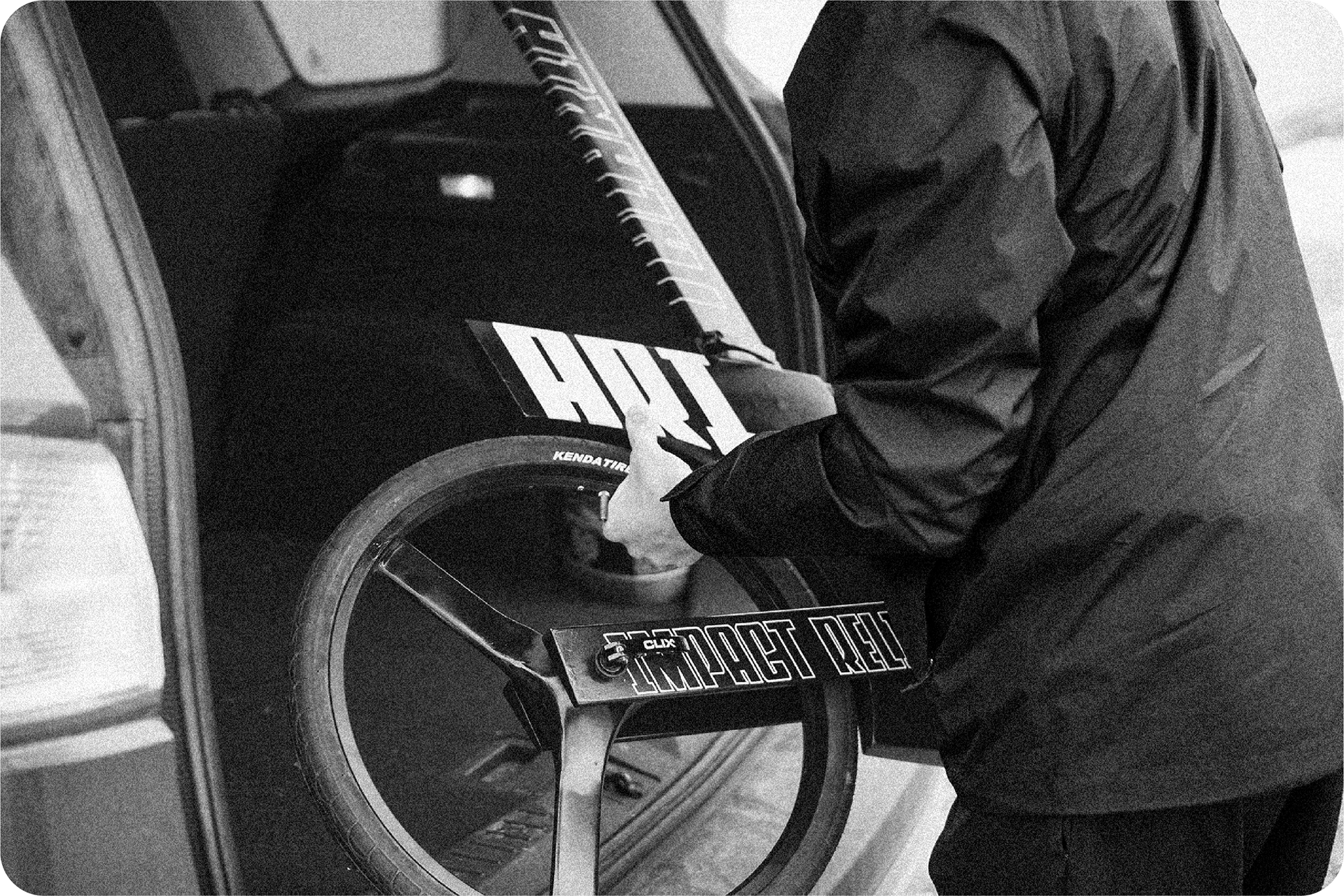
Usability
Compact and collapsible, the ARI is easy to put away and transport when out of use. Simple fastenings and a symmetrical design demand minimal set-up to limit hassle and facilitate adoption.
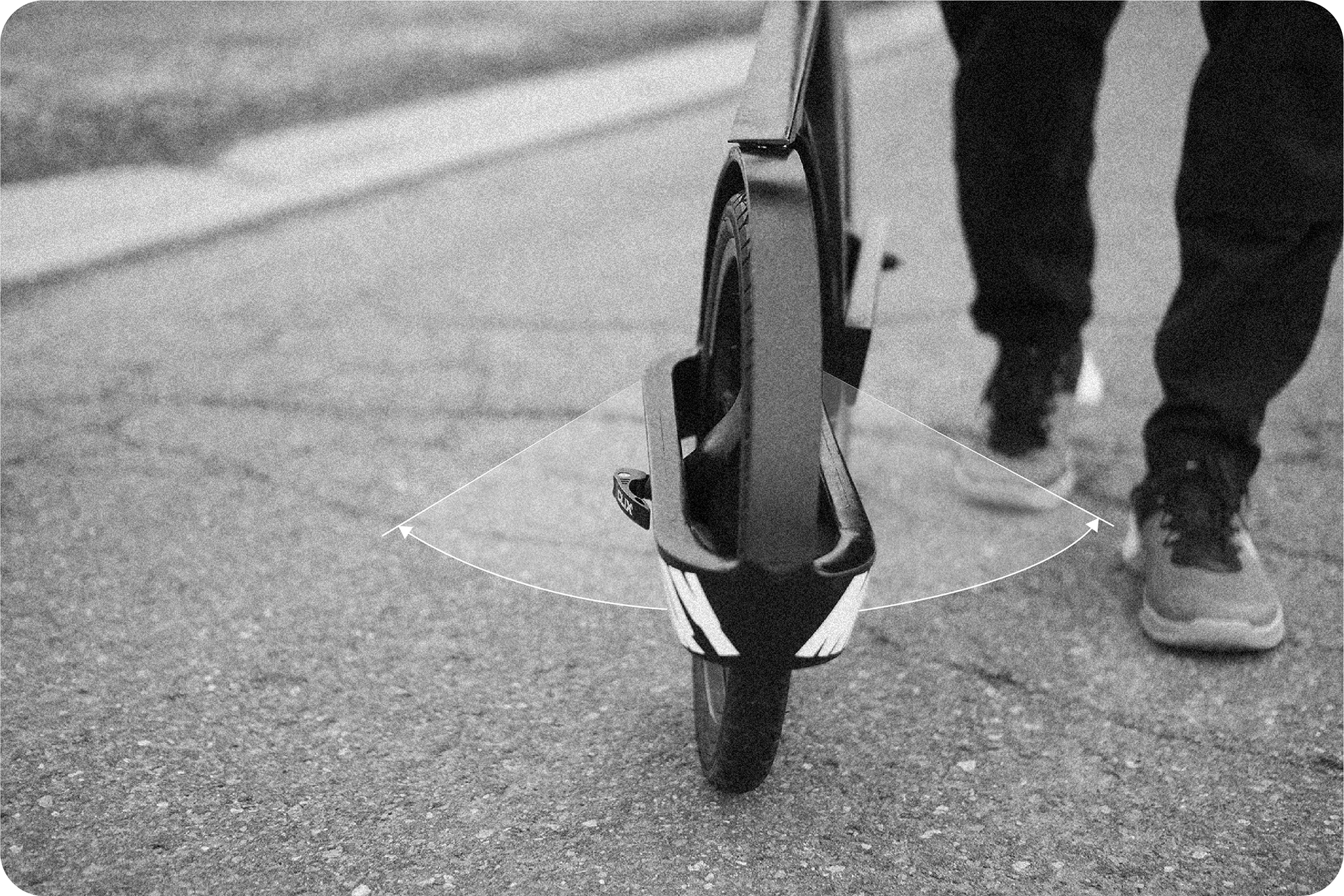
Steering
Inspired by triathletes running in and out of transition zones, the ARI is controlled from the rear and the user's momentum keeps the free front wheel tracking in the right direction. Unlike a bike wheel, a torsion spring system is employed here as a safety feature to limit sudden movement, helping users to better control the product and facilitate an uninterrupted running experience.
The Product
The Mercury ARI does one thing, and it is designed to do it well. In order to maximize impact relief the ARI was designed to occupy a minimal footprint to allow it to track as close to the body as possible, enabling users to distribute their weight into its centre of gravity without altering their balance or stride. The handlebar facilitates dynamic use and accommodates users as they grow more or less dependent. Modification in three axis ensures the product will fit users of any shape, size and ability — also their home and car. It is easy to steer, safe to use and importantly, it doesn't look like it. Much unlike other assistive devices, the ARI looks fast and looks friendly to those all those suffering from the warrior mentality.
The Tools
This project features a handmade, working prototype. Parts were shaped using digital prototyping tools such as 3D scanners, 3D printers, 3-axis CNC and vinyl cutter. Files were prepared using VX Elements, Meshmixer, Solidworks, Fusion 360 and Adobe Illustrator. Much of the rest of the work took place between the woodshop and metal lab, using pretty well every tool in them. Other images and research report developed using Adobe Creative Suite, Keyshot and Sketchbook Pro.